Regulation (EU) 2025/40 on packaging and packaging waste, known as the PPWR, has applied since 12 August 2026. It replaces Directive 94/62/EC and, as a regulation, it applies directly in Spain without waiting for national law. Where it clashes with Royal Decree 1055/2022, the EU text prevails.
The Spanish side is running late. The Ministry for the Ecological Transition has opened consultation on a new packaging decree, and the adaptation will not be complete until well into 2027 at the earliest. In the meantime, RD 1055/2022 still applies wherever it is compatible.
For anyone designing packaging, most obligations arrive between 2028 and 2030. That sounds far away, but a redesign involving printers, cutting dies and existing stock takes months, and nobody wants to redo a product range twice.
What already applies
The first restriction you will notice concerns PFAS in food-contact packaging above certain thresholds. If you make or sell food packaging, ask your supplier for documentation that proves compliance. The exact limits are in the regulation, and whoever signs off the packaging's conformity should check them.
The timeline that affects design
- 2027: takeaway food businesses must accept containers brought by customers. From 2028 they must also offer a reusable option.
- August 2028: all packaging must carry a harmonised pictogram showing material composition and the bin it goes in.
- 2029: reusable packaging will include a traceability QR code.
- 2030: no packaging can be sold below recyclability grade C (70% or more). For grouped, transport and e-commerce packaging, empty space cannot exceed 50%. Minimum recycled plastic content also starts, for example 30% in PET food-contact packaging and in single-use drink bottles.
- 2035 and 2038: by 2035 all packaging must be recyclable at scale. From 2038 only grade A or B packaging will be allowed (above 95% and 80% or more, respectively).
What changes at the design table
Leave room on the label
If you are redesigning a range that will still be on shelves in 2028, leave space for the harmonised pictogram. The Commission sets the format, and reserving that space now is far easier than squeezing it onto a finished design later.
Fewer mixed materials
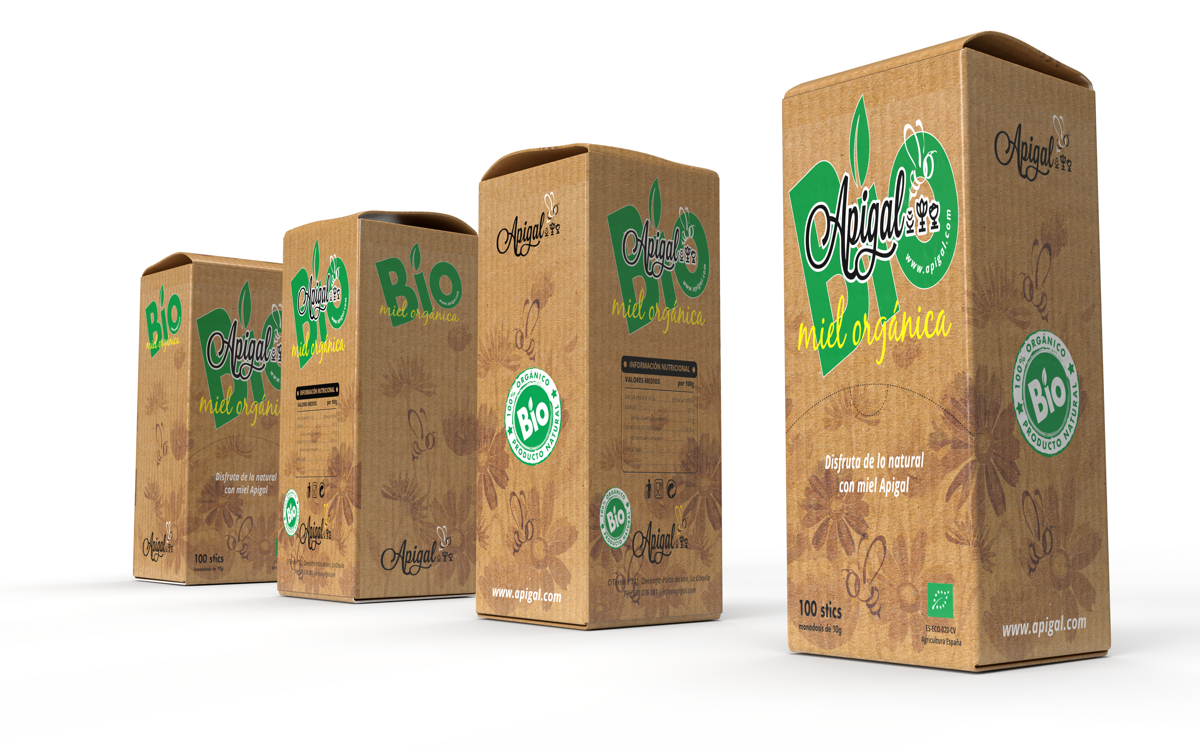
Recyclability will be graded, and every added material makes separation harder. A cardboard box with a glued plastic window, gloss lamination and metallic foil has a harder time than a mono-material one with simple finishes. That conversation needs to happen with the printer before the first sketch, because it shapes paper, inks and finishes.
Right-sized boxes for online shops
The 50% empty-space rule is aimed squarely at online sellers who ship in standard boxes full of filler. Designing two or three formats sized for your best-selling products helps you comply and also cuts what you pay to ship air.
Goodbye to false bottoms
The regulation also targets double walls and false bottoms used to make a product look bigger than it is. If your premium packaging relies on that, it is time to rethink it.
Where to start
For a brand with several products, start with an inventory: material, finishes, size and sales channel for each pack. With that table in front of you, it quickly becomes clear which pieces will last until 2030 and which should be redesigned in the next print run. For the design side, this article looks at where packaging is heading this year.
Official text: Regulation (EU) 2025/40 in the Spanish Official Gazette (BOE).